
Does steel framingrust? Coatings & coastal builds
Does steel framing rust?
What corrosion protection means in practice, why most framing is protected inside the building envelope, and what changes near the coast — the detailing behind durable New Zealand builds.
What galvanising protects against, and what changes near the coast.

Steel can corrode when unprotected metal meets moisture and oxygen — which is why light gauge steel framing isn’t supplied as bare steel. It’s made from metallic-coated (galvanised) sheet and installed within a protected building envelope. Properly specified and installed, it isn’t expected to suffer severe corrosion. That’s not the same as “steel can never rust”.
What galvanising does
Galvanising applies a zinc-based coating to the steel sheet before roll forming. It protects in two ways:
- Barrier protection — it separates the underlying steel from the environment.
- Sacrificial protection — zinc corrodes preferentially, protecting small exposed areas of steel.
The coating specification is part of the product’s durability system. Don’t select framing by thickness alone — request the product specification and relevant durability documentation.
Why framing inside a wall differs from exposed steel
A wall frame sits behind cladding, underlay, cavity components and internal linings. In that closed, dry environment it isn’t exposed to rain or salt spray in normal service. That’s very different from exterior brackets, exposed subfloor framing, decks and balconies, open-sided structures, cladding fixings, or steel stored outdoors — all of which can face far more aggressive conditions and may need a different material or system.
What can cause corrosion problems
- Persistent water entry. A leak that repeatedly wets framing overwhelms the “dry wall” assumption. The fix isn’t a thicker coating — it’s preventing entry and letting any wet assembly dry.
- Coastal salts. Salt accelerates corrosion; distance from the sea is only one factor alongside wind, topography and shelter.
- Incompatible metals. Dissimilar metals in contact with moisture can drive galvanic corrosion — check compatibility at connections and penetrations.
- Damaged coating or wet storage. Dragging members, aggressive cutting or trapped moisture can damage coatings; store deliveries clear of the ground and ventilated.
“A highly durable frame paired with unsuitable fasteners is not a durable assembly.”
What changes for a coastal build
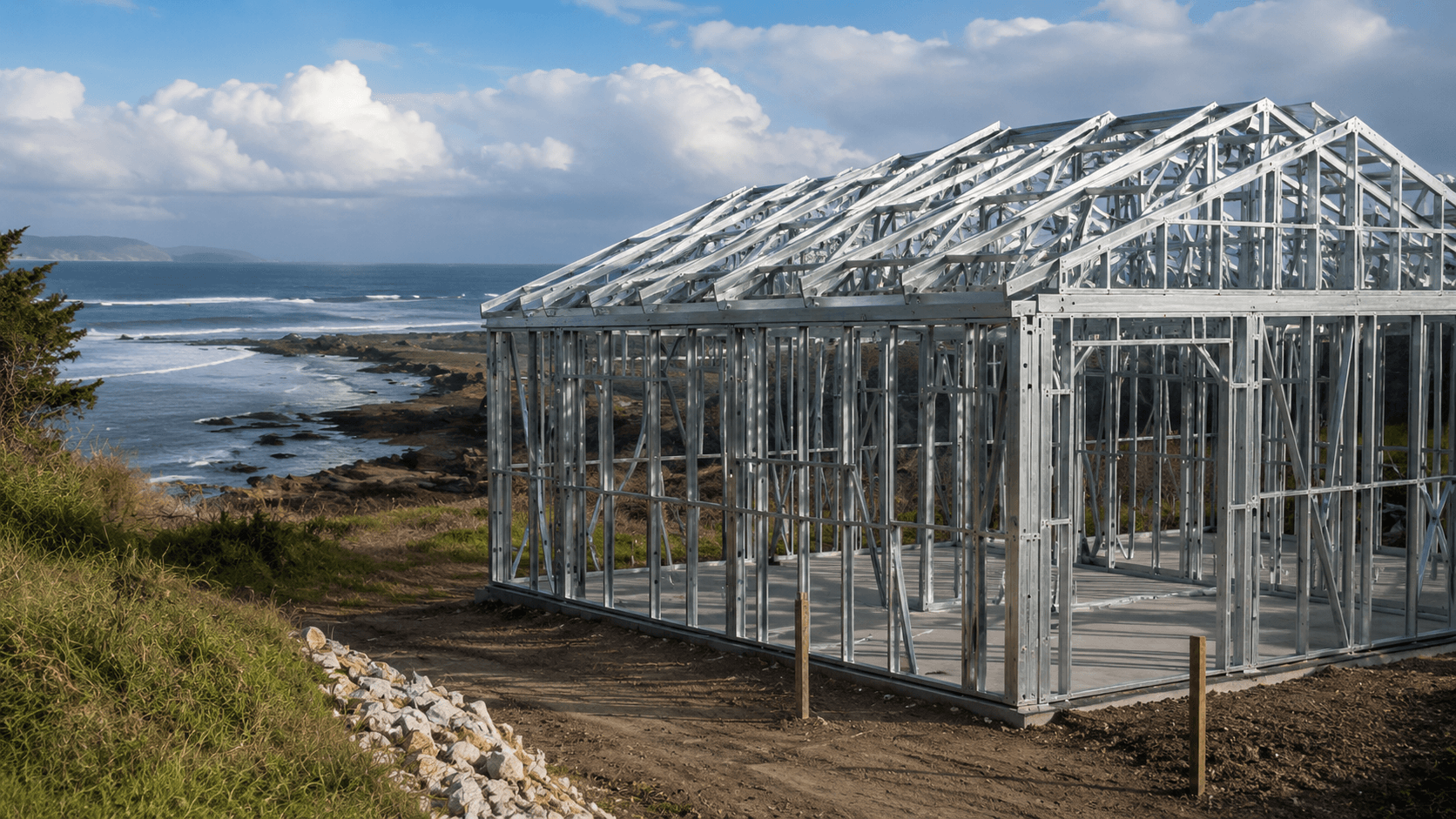
A coastal project should begin with the site exposure, not a blanket statement that galvanised steel suits everywhere. Ask the designer and supplier to confirm the site’s corrosion exposure, whether framing is enclosed or exposed, the coating specification, fastener and anchor durability, treatment of open subfloors, compatible metals at connections, and inspection requirements. Very exposed environments may need upgraded materials or specific design.
Screws, anchors and cut edges
Fasteners are the overlooked part of corrosion design. The frame, screw, bracket and anchor should have compatible durability for their location — a screw in a dry cavity doesn’t face the same exposure as an anchor at a slab edge. As for cut edges: not every cut needs paint, because metallic coatings give sacrificial protection to small exposed areas. Where treatment is needed, follow the supplier’s documented repair method rather than an arbitrary paint.
The practical answer
Bare steel can rust. Properly coated light gauge steel framing, installed in the dry environment it was specified for, is designed to resist corrosion for the required building life. The mistake is treating all steel, all fixings and all locations as equal — coastal durability comes from a compatible system and good moisture management, not a single marketing claim. See also what light gauge steel framing is.
Steel corrodes when bare metal meets moisture — so framing is made from galvanised sheet and installed inside a protected envelope. Specified and installed correctly, it isn’t expected to suffer severe corrosion.
What galvanising does
A zinc coating gives barrier protection and sacrificial protection to small exposed areas. Choose by the durability spec, not thickness alone.
What causes problems
- Persistent leaks and trapped moisture
- Coastal salts
- Incompatible metals at connections
- Damaged coatings or wet storage
“A durable frame with unsuitable fasteners is not a durable assembly.”
Coastal builds
Start from the site exposure. Confirm coating, fasteners, subfloor treatment and compatible metals — very exposed sites may need upgraded materials.
Building in a coastal or high-exposure zone?
Give us the project address and design information and we’ll review the framing scope and durability requirements early.
Share your site details and we’ll review durability requirements early.